10 June 2026
Rotterdam
Gasunie, OGE
DRC-Update
European energy leaders sign MoU to develop major cross border CO₂ infrastructure between Germany and the Netherlands
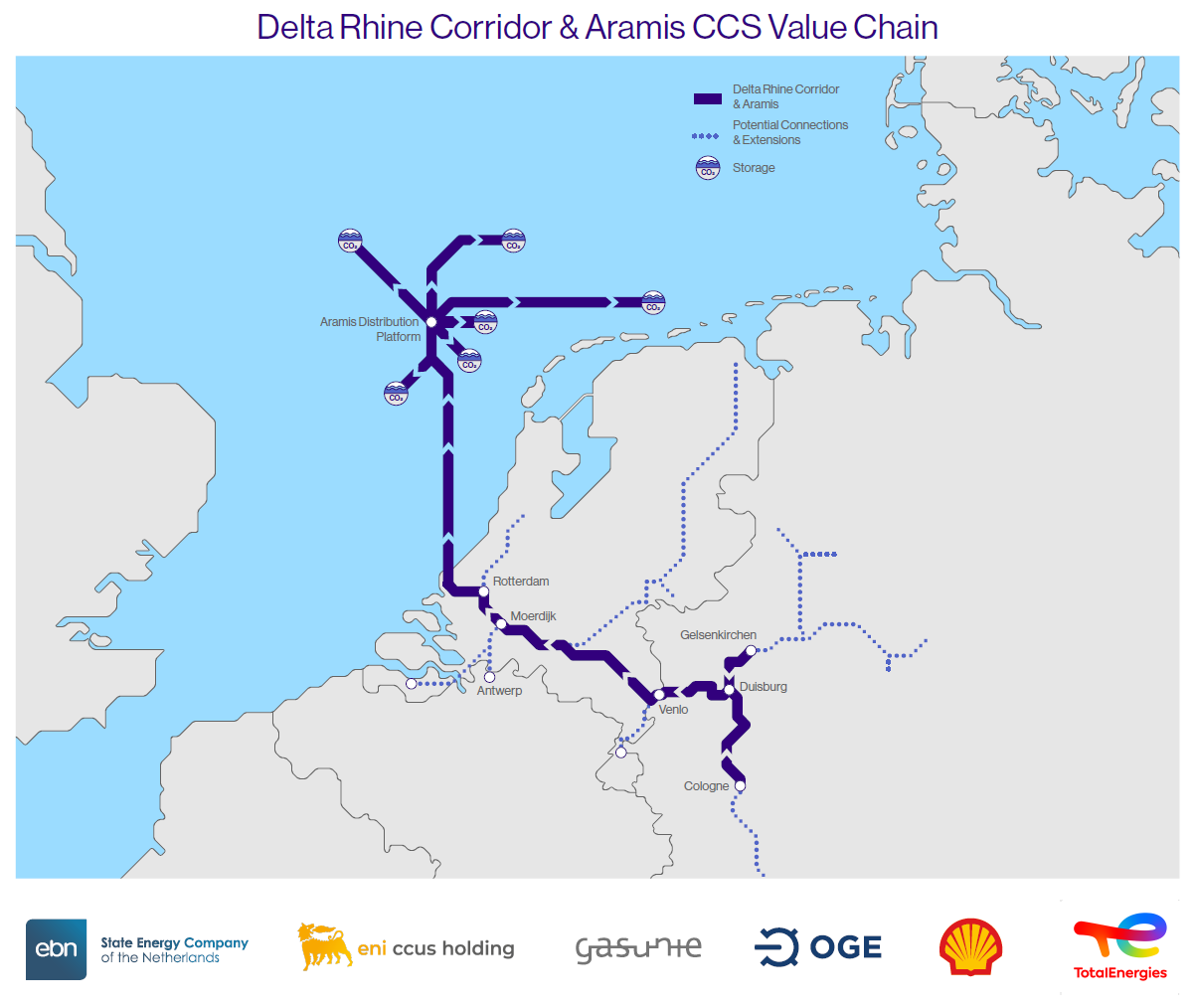
Energie Beheer Nederland (EBN), Eni Netherlands CCUS, Gasunie, Open Grid Europe (OGE), Shell and TotalEnergies EP Nederland have signed a Memorandum of Understanding. The parties agreed to collaborating on the development of an interoperable, cross border CO₂ pipeline network connecting industrial clusters in North Rhine Westphalia with offshore storage locations in the Dutch North Sea, including an integration with the Aramis project.
The agreement represents a significant milestone in the realisation of the Delta Rhine Corridor (DRC), a planned underground pipeline system designed to transport CO₂ from western Germany and the Netherlands at scale to depleted gas fields beneath the seabed via the Aramis offshore pipeline.
The collaboration between Dutch and German partners underscores the importance of coordinated European action. Germany hosts significant industrial clusters with substantial CO2 volumes, while the Netherlands offers offshore storage potential. The document highlights this shared ambition: “By joining forces, the partners aim to accelerate the development of a fully integrated, cross-border CO₂ network”
As companies from many industrial sectors such as cement, lime, waste to energy, steel and chemicals will continue to generate hard-to-abate emissions in the coming decades, CCS is a vital technology for those companies to decarbonize in a cost-effective way.
Therefore, CCS infrastructure is becoming a critical enabler for safeguarding Europe’s industrial competitiveness and supporting its climate objectives. The DRC will provide one of the first major cross-border CO2 routes in Europe, creating a reliable pathway for industries to access offshore storage sites and leveraging economies of scale. The DRC will also enable a future connection to Belgium via the Delta Schelde Connection project, supporting the emergence of a broader, integrated pan-European CO₂ network.
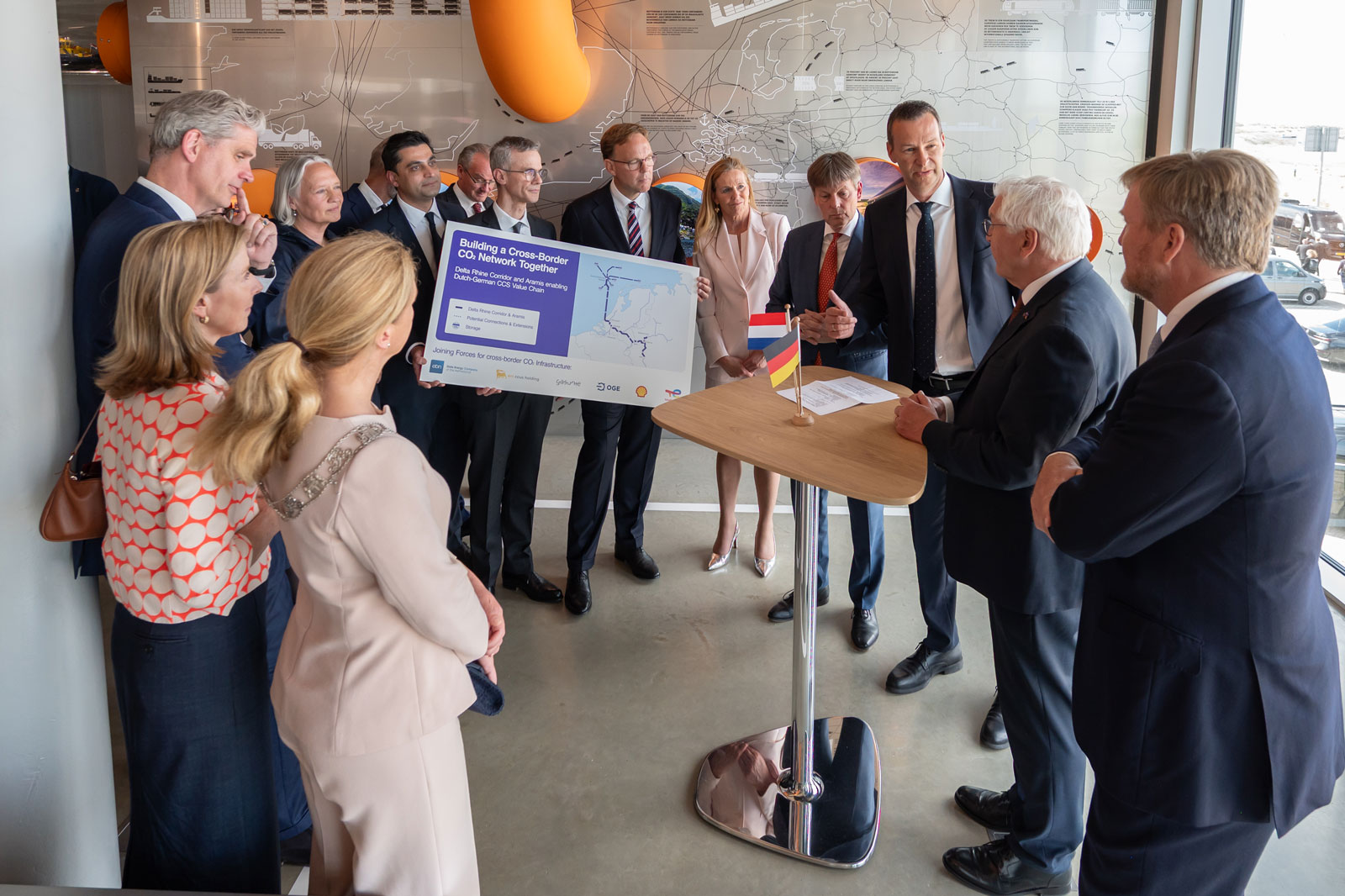
In presence of King Willem-Alexander and Federal President of Germany Frank-Walter Steinmeier the partners of the Delta Rhine Corridor and Aramis cross-border CCS value chain illustrate the cooperation between EBN, Eni Netherlands CCUS, Gasunie, OGE, Shell and Total Energies EP Nederland.
All MoU signatories are active in CO₂ transport and storage and share the ambition to establish an interoperable, cross-border pipeline-based Carbon Capture and Storage (CCS) value chain aiming to be operational from 2033 onward. First parts of the pipeline corridor in the Netherlands aim to be operational in 2032 already. Until the pipeline-based Dutch-German CO2 transport system is in place, customers are able to make use of the ship-and rail-based CO2-infrastructure to enable offshore transport and storage via the Aramis project. Aramis is aiming for a final investment decision in 2027 and an operational start in 2030.
In the coming months, the MoU signatories will coordinate on a non-binding basis on matters such as advocacy and communication, a transparent customer journey and technical alignment of the Delta Rhine Corridor and Aramis: a Dutch-German CO₂ pipeline transport and storage system.